Pages

Tuesday, 25 September 2012

[WIP] Japanese Chrysanthemum

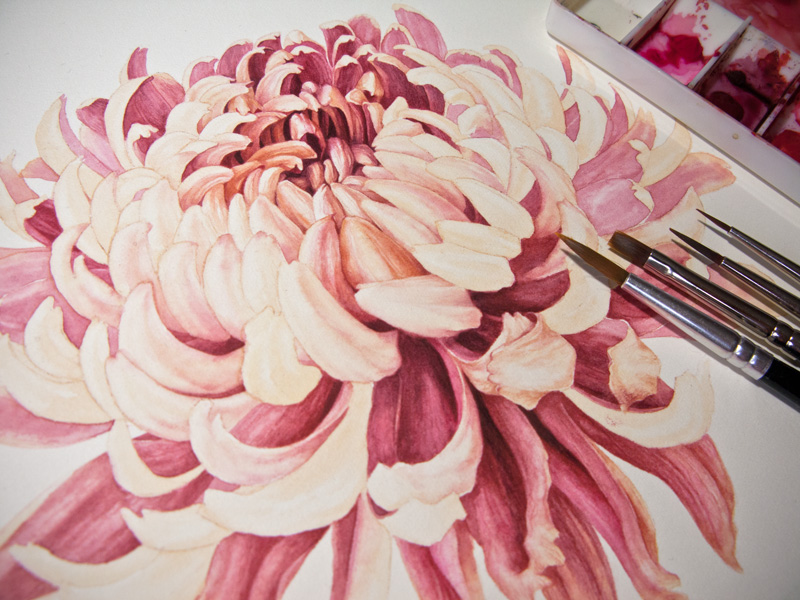
Taking longer time than I thought before. I've already started painting the Japanese Chrysanthemum in my spare time for these 2 -3 days and seem it won't be finished soon.


The red mixes were Permanent Rose, Opera Rose, Quinacridone Red, Cadmium Yellow Pale and a lil amount of French Ultramarine.
Previous post: The Sketch

Sunday, 23 September 2012

[TIPS] Chrysanthemum: A Touch of Dry Brush


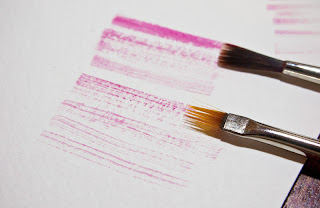
Wet in wet and glazing are watercolour techniques I use the most, but sometimes an object requires a different technique. This Chrysanthemum flower has hard edged/ broken pattern with striking colour on each petal. For it, I need a touch of dry brush technique.

Dry brush is the opposite technique to 'wet in wet'. It involves more pigment, less water and a completely dry paper.

My tips:
1. Make sure the paper and the background colours completely dry.
2. Make a fairly dark mix with just a little water.
3. Load the brush and use kitchen roll/ tissue paper to remove excess fluid.
4. Flatten the end of the brush to separate its hairs slightly.
5. Drag the brush along the area you want then gently lift it off before the end.
6. To have a fully patterned petal's tip, use paper or masking fluid to cover white paper.
7. Establish the wanted effect (e.g. scratchy look) on other paper. It is good to exercise a just pressure and dryness. Once you get what you want, work on the actual piece.

Saturday, 22 September 2012

[TIPS] Taking Care of Watercolour Brushes from Rosemary

A few month ago NSBA got a special guest, Rosemary, a brush maker with 30 years of experience. She demonstrated how to create rounded, flat and fans shape Kolinsky Sable brushes. She also pointed out various forms of brush that I saw for the first time, the sword lines, triangular point, comber, 'tadpole'/ extended point brushes, and some more. Everything was done manually, including how to make the strongest sable hair in the middle of the brush and how to get the tip of the brush taper. A very interesting demonstration.


Later Rosemary shared some tips on taking care of watercolour brushes. I didn't make a note of all of them, but I keep some relevant tips for my self:


1.
Always clean brushes thoroughly after each painting session. For Kolinsky or Sable, rinse in cold water. Remove as much moisture as possible with kitchen roll and reshape before storing.

2. To prevent brush's handle from loosening/ cracking, try to keep handles dry when you dip the brush head into water. Only wet the ferrule.

3 Expensive/ perfect pointy brushes shouldn't be used to mix the paints.

4. Another special treatment is to recondition your sables as you would your own hair! Once a year, take ordinary hair conditioner and apply just one or two drops to the heads allowing to soak, then rinse well before storing again.

I also ask what to do to repair a bent synthetic (nylon) brush, she said to dip it in boiled water for about 2 seconds, reshape the head and let it dry naturally. Warning! It was for synthetic brushes only, never do it to natural Kolinsky/ Sable brushes.

Sunday, 16 September 2012

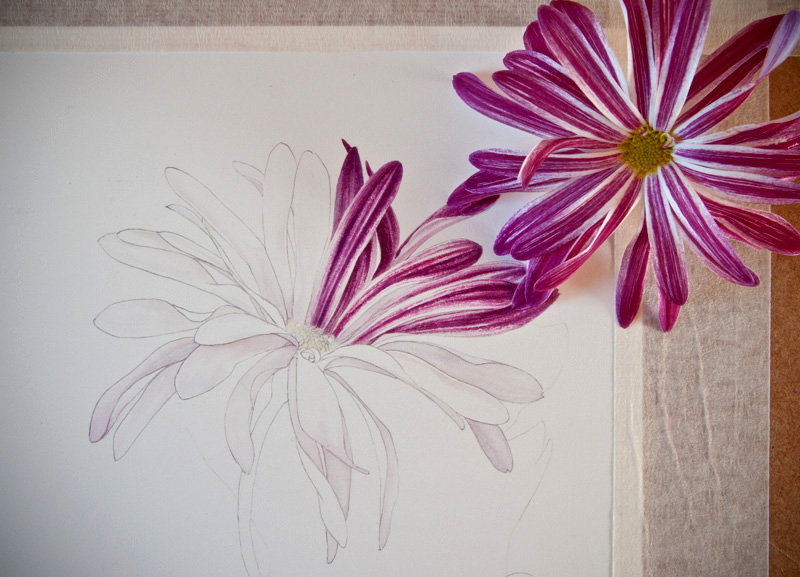
[WIP] Japanese Chrysanthemum

Autumn is coming and I just met its lovely and delicate flower, Japanese Crysanthemum. Just settled down the sketch, I hope I will have time to paint on it soon.


Saturday, 15 September 2012

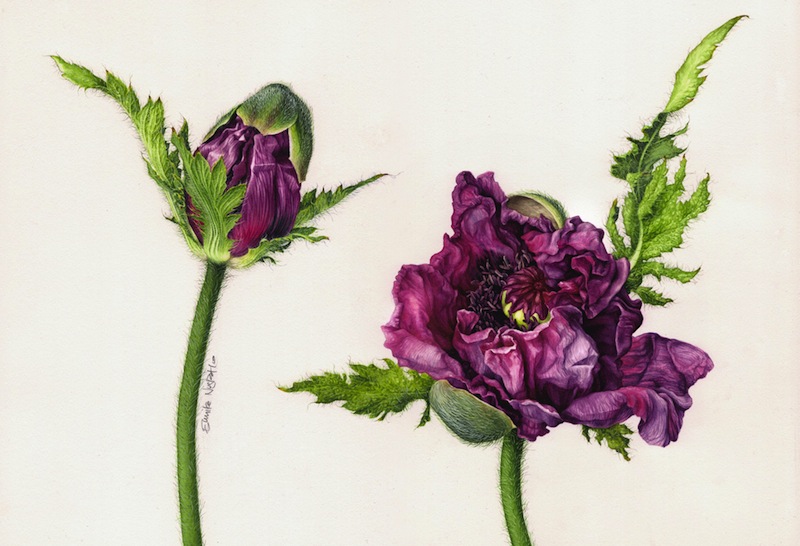
Oriental Poppies: Zoom it in!

Yesterday I read Mattias's blog and found a feature to see the details of his work. Very cool! I made it for my Oriental Poppies.

Just ZOOM in on it to see the details :)


P.S. I don't have to share a huge file to let anyone enjoy my work with all the details anymore. What I need to do is just keeping the big file in a dropbox folder in my computer (or flickr, or any server you like) then giving the link to Zoom.it. Zoom it will do the rest and you can share your work excellently. Enjoy! :)